Research
The frameworks and intervention strategies underpinning the toolkit were developed during a three year study on Early School Leaving across five EU Nation: Orienta4YEL. Thanks to funding from UKRI, Research England and our stakeholder partners we have further co-developed the toolkit to help a range of professionals in their work to support young people.
Research outputs are organised below into journal articles and impact and programme evaluations.
Research Project Website

Impact and Programme Evaluations
External evaluations, project reports, and documentation of how partners adopt our research.
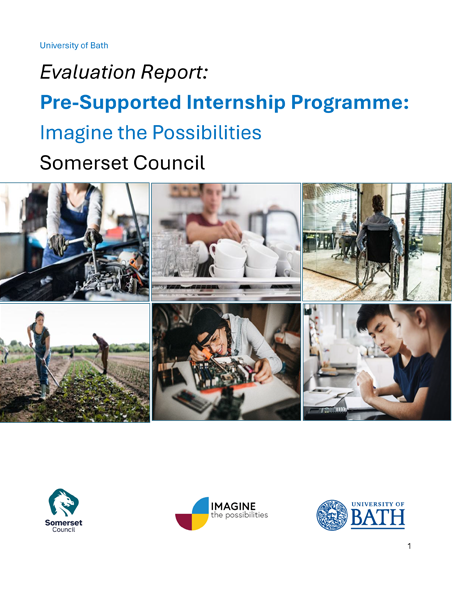
Evaluation Report: Somerset's Pre-Supported Internship
This 2026 report details how Somerset Council’s Supported Employment Team embedded our toolkit approaches within their pre-supported internship programme. Using survey and interview data, the evaluation explores the impacts on young people’s progression through a lens of Connected Belonging. Case studies bring to life the experiences of four young people.
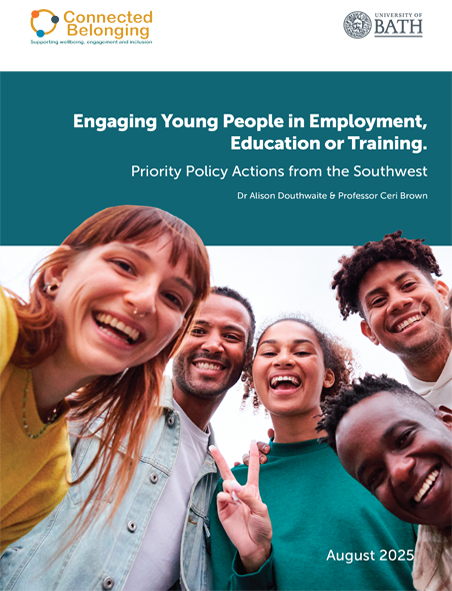
Engaging Young People in Employment, Education or Training
This 2025 report draws on six-years’ research into early school leaving, school wellbeing and NEET outcomes. It outlines recommendations developed through two subsequent policy roundtables; one bringing together 50 local authority and third sector leaders in NEET prevention from 11 Southwest unitary authorities; another to hear from 43 young people from five Southwest authorities who were NEET or had lived experience of barriers to engagement.

Evaluation Report: Somerset's SEET Programme
This 2026 report evaluates the impact of the SEET programme on NEET young people's engagement and progression. The programme, run by Somerset Council's Imagine the Possibilities, Supported Employment Team, integrated toolkit approaches and frameworks. Using survey data and interview data,the report exploresthe impacts on a cohort of young people. Case studies bring to life four young people's experiences.

Career Matters Article
This article from the November 2025 edition of the magazine outlines what makes interventions effective. It also highlights the research-informed tools available to put this into practice at www.connectedbelonging.co.uk
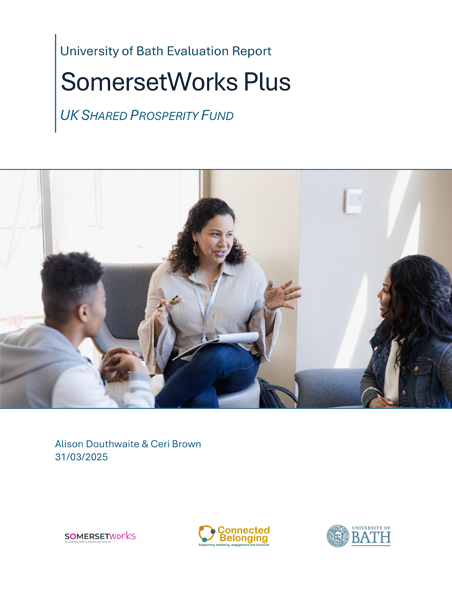
Evaluation Report: SomersetWorks Plus
This 2025 report focuses on a support programme developed by Somerset Council to enable engagement and progression support for young people beyond the age of 18. By engaging and training external Advocates in the Pathway to Change and adapting our Risk Review tool for use during support, the evaluation sought to identify the cohort's key barriers to engagement and to understand the value of the strategies in supporting young people's engagement. Focus Groups with Advocate's delivering the programme explored the key barriers and their perceptions of the impact of their support.
Evaluation Report: Mendip NEET Prevention Pilot
This 2023/4 report evaluates the impact of Somerset Council's pilot of three approaches to support young people's educational engagement and outcomes. Working ‘upstream,’ with young people registered at schools within Mendip who have an increased likelihood of early school leaving, the project trialled one-to-one advocacy support for Year 11/12 transition; a 14-16 College Programme for Year 10/11 students; small group school-based support from an neurolinguistic programming professional for Year 9 students. Interviews with young people and staff supported evaluation ofthe impact of each activity.

Somerset's Supported Employment Offer
These slides outline how Somerset's award-winning Imagine the Possibilities team have integrated research insights and toolkit approaches. Their trailblazing partnership has transformed the employment landscape for young people with SEND across rural Somerset through bold collaboration and strategic coherence. In just a few years, the partnership has grown supported internships from one programme to 15 across the county, giving more than 100 young people each year access to meaningful real-world workplace experiences that lead to paid employment.
Journal Articles
Open access articles in peer-reviewed, academic journals.
The Connected Belonging Questionnaire (CBQ) as a Youth Voice Measure: Operationalizing an Intersectional Lens to Engage Young People
School belonging shapes young people’s outcomes, yet marginalized groups often feel less connected. This research introduces Connected Belonging and a validated survey tool to help educators understand diverse experiences, including those at risk of becoming NEET. Grounded in youth voice, it supports more inclusive, responsive approaches to wellbeing, engagement, and education systems.
Accessing Optimism: Rethinking Wellbeing, Inclusion, and Belonging for Young People in Britain Who Are Not in Education, Employment, or Training (NEET)
For decades, UK policy has focused on raising aspirations to improve social mobility, rooted in neoliberal meritocracy. This paper challenges that view, proposing ‘hopeful optimism’ as a more realistic, relational alternative. Grounded in Connected Belonging research, it reframes success beyond economic terms, supporting young people to thrive, imagine possibilities, and resist fear of failure.
A Conceptual Framework for Researching the Risks to NEEThood
Peer-reviewed academic article introducing the conceptual framework for understanding risks NEET/Early School leaving developed during a three year research study to understand and intervene on Early School leaving across five EU nations.
Comparing Young People’s and Educators’ Views on the Risks to NEEThood
Peer-reviewed academic article comparing young people’s and educator’s views on the factors that lead to NEET outcomes. Drawing on data from South West England, this paper offers insights into young people’s priorities and experiences.
Five Mechanisms for Tackling the Risks to NEEThood: Introducing a Pathway to Change to Guide Educators’ Support Strategies
Peer-reviewed academic article introducing five mechanisms for tackling the risks to NEET/Early School Leaving and introducing a Pathway to Change to guide educators’ support strategies. Drawn from findings of a three year research study to understand and intervene on Early School leaving across five EU nations.
‘Failures’ in a failing education system
Comparing structural and institutional risk factors to early leaving in England and Portugal.
Comparing early leaving across Spain and England - variation and commonality across two nations of high and low relative early leaving rates
Peer-reviewed research article comparing early leaving across Spain and England, drawing from 77 interviews and focus groups with 309 educational stakeholders across 21 settings.